Choosing the Right Pirate Clipart for Professional and Creative Projects
Visual storytelling has become a cornerstone of modern design, whether you are crafting a birthday invitation, designing a website banner, or creating educational materials for a classroom. Among the myriad of themes available, Pirate Clipart remains a perennial favorite. Its appeal spans generations, evoking adventure, treasure hunts, and maritime history. However, not all digital assets are created equal. Many creators rush into downloading free files without considering resolution, licensing, or versatility, only to find their final product looks pixelated or unprofessional. Understanding what constitutes high-quality Pirate illustration can save you time, money, and frustration.
The Trap of Low-Resolution Downloads
One of the most common mistakes beginners make is ignoring file resolution. You might find a cute Pirate ship clipart online that looks perfect on your screen, but when you attempt to print it on an invitation or a poster, it appears blurry and jagged. This happens because web images are often optimized for speed, not print quality. A standard web image might be 72 PPI (pixels per inch), which is insufficient for physical media.
To avoid this disappointment, always check the technical specifications before downloading. High-quality resources should offer files at approximately 300 PPI. This density ensures that lines remain crisp and colors stay vibrant, whether viewed on a retina display or printed on cardstock. When you invest in a proper Pirate set clipart, you are paying for this clarity. It allows you to scale elements up or down without losing detail, a crucial feature for designers who need flexibility across different mediums.
Overlooking Background Transparency
Another frequent oversight involves background handling. Many novice users download JPEG files, which come with a solid white background. While this might seem harmless, it creates significant limitations. If you try to place a pirate character onto a colored background or a textured paper design for scrapbooking, you will see an unsightly white box around the image. Removing this background manually requires advanced skills in photo editing software and can result in messy, uneven edges.
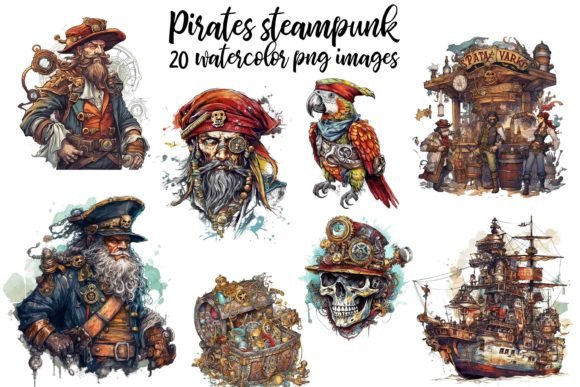
The superior approach is to use PNG files with transparent backgrounds. A professional Pirate watercolor element should be delivered as a separate PNG file for each design, ensuring that the intricate brushstrokes blend seamlessly with your project’s background. This transparency is essential for layering. For instance, if you are creating a composite image with a treasure map and a compass, transparent PNGs allow these elements to overlap naturally, maintaining the illusion of depth and cohesion. Always verify that the Pirate image you choose supports transparency to streamline your workflow.
Misjudging Style Consistency
Creativity thrives on variety, but design thrives on consistency. A common error in curating assets is mixing disparate styles within a single project. You might combine a realistic, detailed Pirate illustration with a cartoonish, flat-design parrot. While both are technically "pirate" themed, the visual clash can confuse the viewer and diminish the professional look of your work. This inconsistency often stems from grabbing free clips from various sources without a unified vision.
Instead, opt for a cohesive Pirate set clipart. A well-curated set ensures that line weights, color palettes, and artistic styles match perfectly. Whether you prefer the soft, blended look of watercolor or the sharp precision of vector-style graphics, sticking to one aesthetic creates a polished final product. For educators creating worksheets, this consistency helps maintain student focus. For marketers, it reinforces brand identity. Before downloading individual elements, review the entire collection to ensure it meets your stylistic needs.
Ignoring Licensing and Usage Rights
Perhaps the most critical yet overlooked aspect is licensing. Many creators assume that if an image is downloadable, it is free to use for any purpose. This misconception can lead to serious legal issues, especially for entrepreneurs and small business owners selling products on platforms like Etsy or Amazon. Using a copyrighted Pirate Clipart for commercial gain without permission can result in takedown notices or fines.
Always read the license agreement associated with your download. Look for terms that explicitly allow commercial use if you intend to sell items featuring the artwork. Reputable providers will clearly state what you can and cannot do. A high-quality digital package typically includes clear usage rights, giving you peace of mind. Remember, paying for a premium set often includes broader usage rights compared to free alternatives, making it a smarter investment for professionals.
What to Check Before You Buy
To ensure you are getting the best value and quality, consider this checklist before finalizing your purchase or download:
- File Format: Ensure you receive PNG files with transparent backgrounds. Avoid JPEGs for layered designs.
- Resolution: Verify that images are high resolution, ideally around 300 PPI, suitable for both web and print.
- Quantity and Variety: A good Pirate set clipart should offer a range of elements, such as ships, skulls, maps, and characters, providing versatility for different projects.
- Compatibility: Check that the files are compatible with your preferred software, whether it is Photoshop, Canva, or Microsoft Word.
- Licensing Terms: Confirm whether the license covers personal use, commercial use, or both.
Maximizing the Utility of Your Assets
Once you have secured high-quality Pirate watercolor or graphic elements, think beyond the obvious. These assets are ideal for more than just children’s parties. Photographers can use them to create unique overlays for portrait sessions. Bloggers can incorporate them into headers to add personality to travel or history posts. Scrapbookers can use them to document family vacations with a nautical theme. The key is to view these digital elements as versatile tools rather than static images.
For example, a Pirate ship clipart can be resized and used as a subtle watermark for photography businesses with a maritime focus. A skull and crossbones illustration can be desaturated and used as a texture background for edgy fashion designs. By understanding the technical qualities of your files—such as transparency and resolution—you unlock endless creative possibilities.
In conclusion, selecting the right Pirate Clipart involves more than just finding an image that looks cute. It requires attention to technical details like resolution and file format, an eye for stylistic consistency, and a clear understanding of usage rights. By avoiding common pitfalls and choosing high-quality, transparent PNGs from reputable sources, you elevate the professionalism of your work. Whether you are a seasoned designer or a hobbyist starting your first scrapbook, investing time in selecting the right assets pays dividends in the quality and impact of your final creation.